2022 to Present
In 2022, Vector-Drive clearly defined its strategic shift from foundational technology development to full-vehicle R&D. In collaboration with Professor Zhao Hai of Northeastern University and Professor Zhang Hua of Chongqing University, the company introduced the Loong-style modular steer-by-wire intelligent chassis design. Built on E-Corner Module technology, the platform enables steerable high-torque in-wheel motor drive, equivalent continuously variable transmission, millisecond-level control response, and advanced ESP functionality.
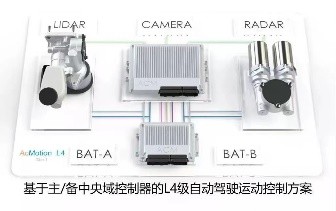
Loong-style modular steer-by-wire intelligent chassis
2023–2024
Vector-Drive achieved a key technical breakthrough by developing a semi-rigid torsional connection mechanism to replace traditional free articulation. This design keeps the relative angle between tractor and trailer within a safe range. The company also introduced tractor-trailer coordinated vector control, known as Vector Drive, which gives the trailer independent driving force, active steering, and braking capability. As a result, the articulated vehicle can operate with a motion model close to that of an integrated single-body truck.
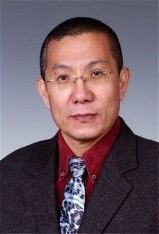
Professor Zhao Hai, Northeastern University
Academic Recognition
In October 2024, a related paper, Optimization for Fuel Consumption and TCO of a Heavy-Duty Truck with Electricity-Propelled Trailer, was published in Elsevier's Energy Research & Social Science journal. The paper provides academic validation for the energy-saving and total cost of ownership potential of an electricity-propelled trailer configuration.
2025–2026
Vector-Drive further defined its quasi-integrated vehicle architecture: a new category that is legally classified as a tractor-semitrailer, but controlled dynamically as an integrated heavy-duty truck. By retaining the GB1589 fifth-wheel coupling to meet regulatory length requirements, while using semi-rigid connection and vector control to eliminate key dynamic weaknesses, the system achieves a cargo volume of no less than 95 cubic meters, representing a 20% improvement over conventional vehicles.
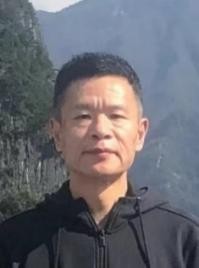
Professor Zhang Hua, Chongqing University