From 2011 to 2015, Vector-Drive entered its foundational stage in distributed-drive technology. In 2011, the Liangjiang Venture Capital team received key support from Chongqing Liangjiang New Area. Under the leadership and direct involvement of Academician Zhong Zhihua, then Director of the Chongqing Science and Technology Commission and Deputy Director of Liangjiang New Area, the team officially began developing a distributed-drive system.
The initial focus was on efficient power transmission, wheel-end drive, and intelligent control for commercial vehicles. The goal was to move beyond the traditional mechanical powertrain architecture built around engines, transmissions, drive shafts, and axles, and to establish the technical foundation for future steer-by-wire chassis, all-wheel drive, and vehicle-level coordinated control.
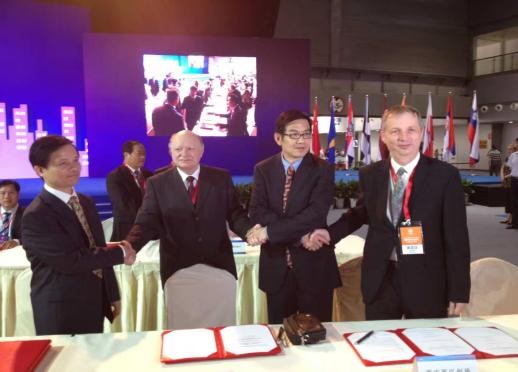
Early distributed-drive system development
In 2013, Ukrainian electrical engineering expert Harchenko Andrey joined the R&D team, strengthening its capabilities in electrical engineering, system integration, and control algorithms. His involvement helped move the project from concept validation toward engineering implementation.
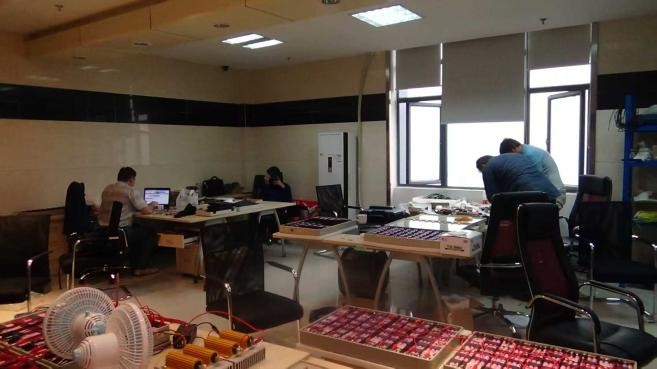
Harchenko Andrey with the R&D team
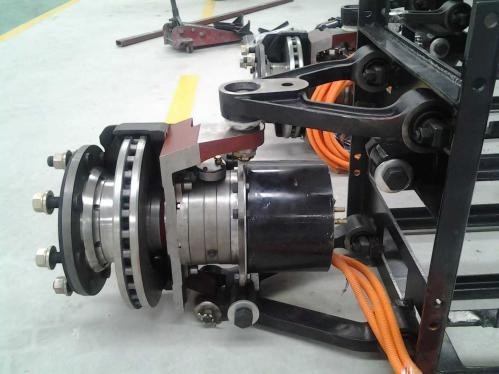
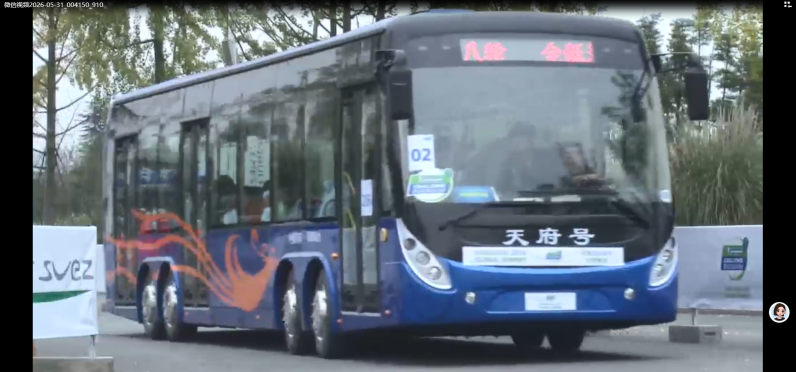
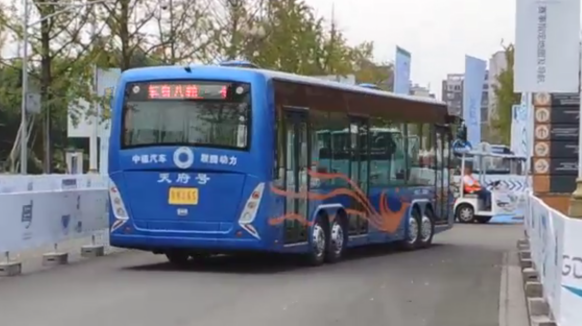
In June 2014, the team completed its first-generation corner module and, in partnership with Chengdu Lianteng, developed what was presented as the world's first eight-wheel distributed-drive "Super Bus." The vehicle was showcased in Chongqing Liangjiang New Area and later participated in the Michelin Challenge Bibendum in Chengdu, where it received positive recognition during an inspection by Wang Dongming, then Party Secretary of Sichuan Province.
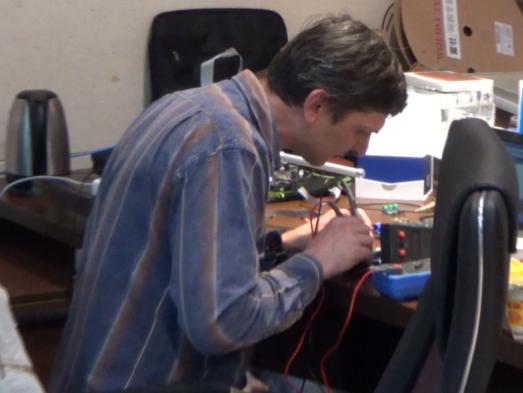
First-generation corner module
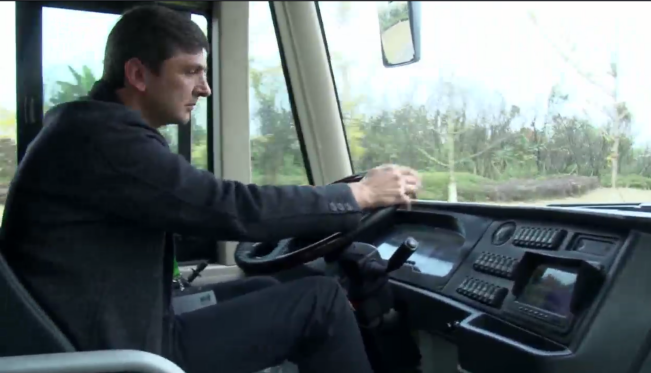
World's first eight-wheel distributed-drive "Super Bus"
Showcased at Michelin Challenge Bibendum in Chengdu
Inspection by Wang Dongming, then Party Secretary of Sichuan Province
Technical foundation for future developments
The importance of this stage was not only the completion of a prototype vehicle. More importantly, it proved that distributed drive could be applied to commercial vehicles: power could shift from centralized mechanical transmission to wheel-end distributed control, and vehicles could evolve from passive mechanical execution to active intelligent control. This became the earliest technical foundation for Vector-Drive's later E-Corner modules, steer-by-wire chassis, tractor-trailer coordinated control, and vehicle-level L4 intelligent articulated freight system.